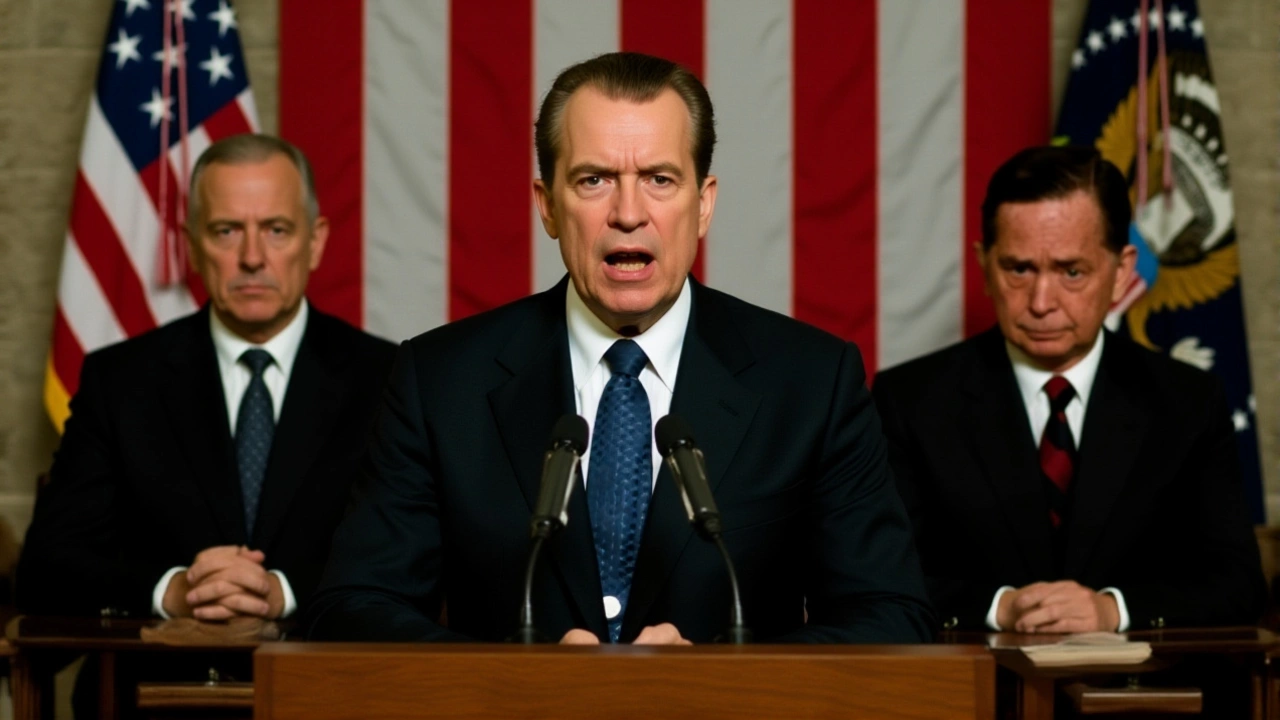
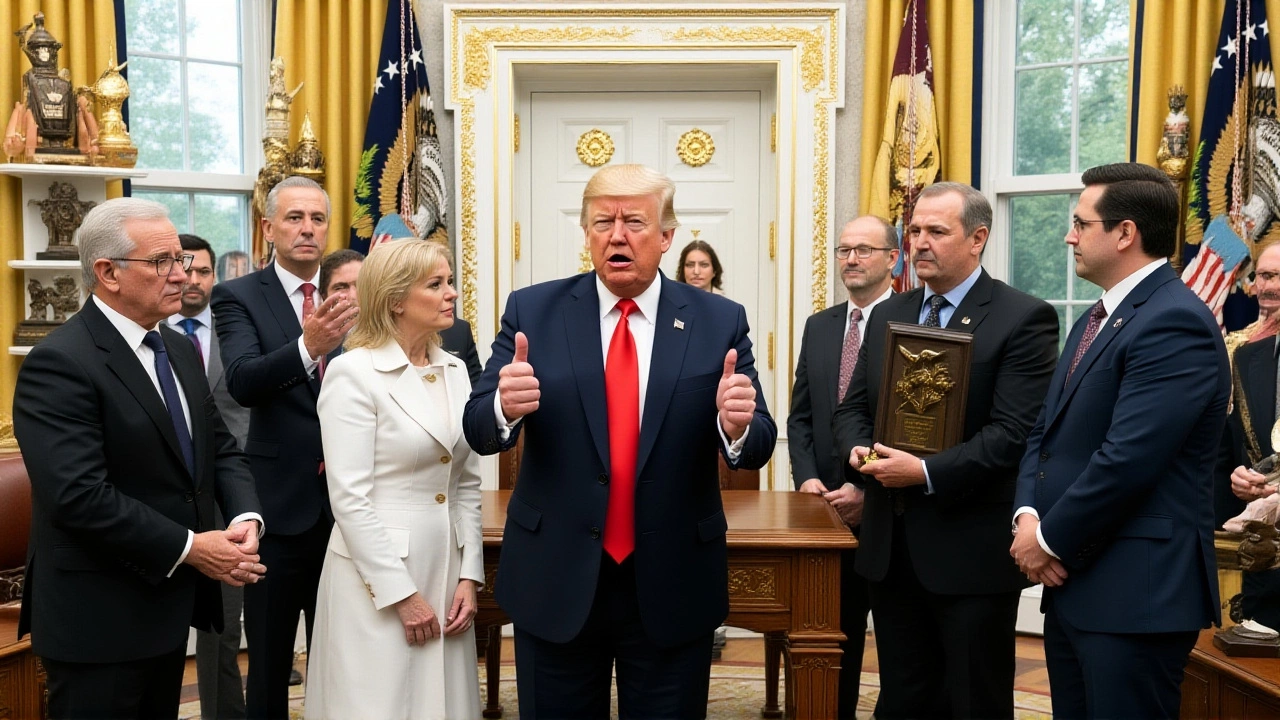
On April 15, 2025, President Donald J. Trump unleashed the most aggressive trade policy since the 1970s, imposing reciprocal tariffs from 10% to 54% on imports from over 180 countries. The move wasn’t just protectionism—it was a declared war on the global financial architecture built after World War II. And it was no accident. As economist Yanis Varoufakis had predicted months earlier, Trump was executing what he called an "anti-Nixon Shock"—a deliberate unraveling of the Bretton Woods system that had anchored the dollar’s global dominance since 1944.
The Nixon Shock That Changed the World
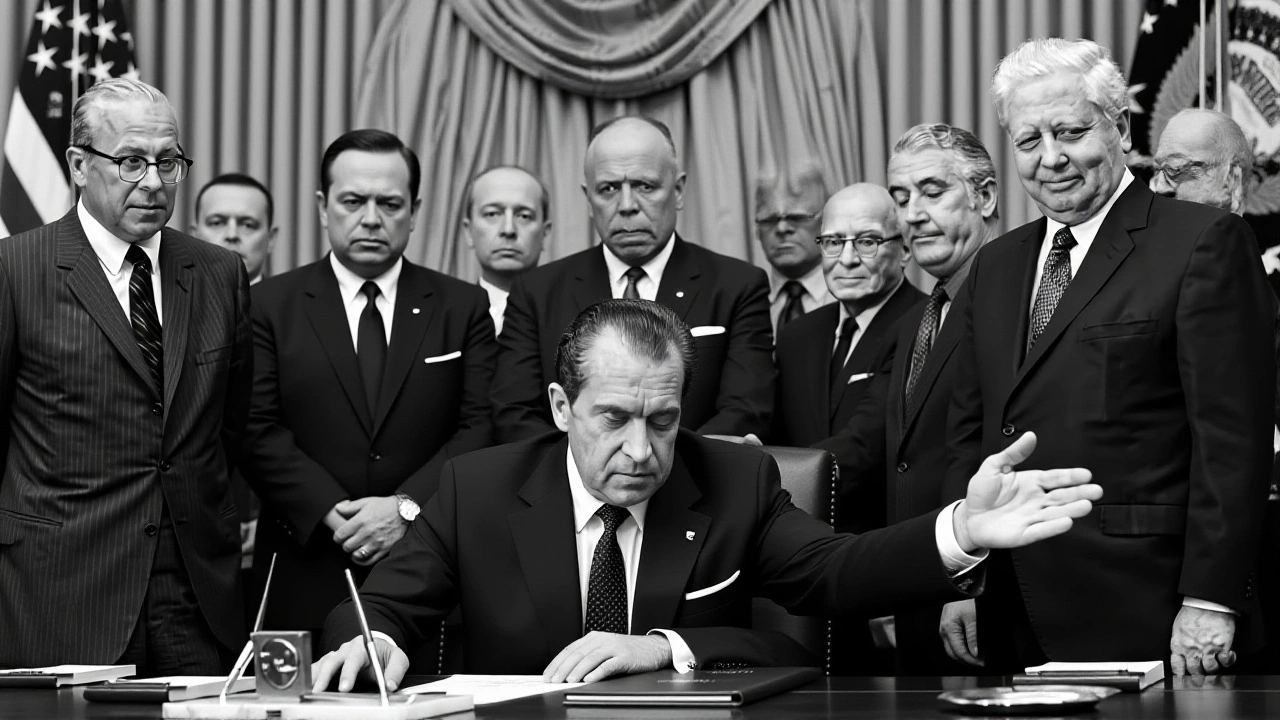
On August 15, 1971, President Richard Nixon stunned the world by ending the convertibility of the U.S. dollar into gold. The decision, made at the Mount Washington Hotel in Bretton Woods, New Hampshire, dismantled the postwar monetary order. It wasn’t just a policy shift—it was a seismic realignment. Currencies floated freely. The dollar became the world’s reserve currency, not because it was backed by gold, but because there was no better alternative. For decades, that system fueled globalization, cheap imports, and Wall Street’s rise.
Now, Trump wants to undo it. Not by returning to gold—too impractical—but by making the dollar so expensive, so uncompetitive, that foreign nations are forced to devalue their own currencies. The goal? To revive American manufacturing by killing the subsidy foreign exporters have enjoyed for over a decade.
The $520 Billion Hidden Tax
Here’s the thing: the U.S. dollar has been overvalued for years. According to a Coalition for a Prosperous America analysis from July 2024, that overvaluation acted like a $520 billion import subsidy for foreign manufacturers in 2023 alone. American factories couldn’t compete. Steel plants closed. Toolmakers shuttered. Workers in Ohio, Pennsylvania, and Michigan watched their towns hollow out—not because of automation, but because the dollar made everything cheaper to buy from abroad.
Trump’s response? Tariffs. Not just on China, but on Germany, Japan, South Korea, Brazil, and even Mexico. Rates range from 10% across the board to 54% on nations deemed "currency manipulators." The logic? Force central banks to lower interest rates. Watch their currencies fall. Watch the dollar’s rise slow—or reverse. Then, and only then, come the negotiations.
Phase One: Shock. Phase Two: Negotiate.
Yanis Varoufakis, now a professor at the University of Athens, laid out the two-phase plan in his February 2025 essay. First, slam the tariffs. Create chaos. Make foreign central bankers sweat. Make their exporters bleed. Make their stock markets tremble. Then, when they come begging to the White House, offer them a deal: weaken your currency, buy more American goods, and we’ll lower your tariffs.
It’s a high-stakes poker game. And Trump, as Varoufakis notes, is betting his presidency on it. But here’s the twist: if it works, the U.S. trade deficit shrinks. Foreign investors—those who’ve poured trillions into U.S. Treasuries and Wall Street—will pull back. No more cheap money. No more asset bubbles. No more real estate booms in Miami and Austin fueled by foreign capital. That’s when Trump faces his impossible choice: betray the financiers who bankrolled his campaigns… or betray the auto workers and steelworkers who voted for him.
Experts Warn: This Could Backfire
Perry Mehrling, professor at Boston University’s Pardee School, drew direct parallels to Nixon’s 1971 playbook: tariffs, dollar devaluation, Fed easing. "It worked," he said on a Bloomberg Odd Lots podcast, "but it sparked stagflation. Inflation didn’t disappear—it just changed shape."
David Rosenberg, chief economist at Rosenberg Research in Toronto, was blunter: "In a global trade war, there are no victors. The cost doesn’t vanish—it gets passed to the guy buying groceries, the family replacing their washing machine, the small business importing parts from Taiwan."
And then there’s Douglas Irwin, economics professor at Dartmouth College. He pointed out a fatal flaw: Nixon’s move was clear, irreversible, and technically feasible. Trump’s? "Vague. Long-term. Unenforceable." What does "rebalancing the global order" even mean? How do you measure success? There’s no metric. No exit strategy.
The Nightmare Scenario
Varoufakis’s warning is chilling: "When U.S. deficits exceed some threshold, foreigners will panic. They will sell their dollar-denominated assets and find some other currency to hoard. Americans will be left amid international chaos with a wrecked manufacturing sector, derelict financial markets and an insolvent government."
That’s not hypothetical. It’s what happened in 1971—but in reverse. Then, the world feared the dollar’s collapse. Now, the fear is that the dollar will become too strong, too isolated, too toxic to hold. And when that happens, the U.S. won’t just lose its trade advantage—it could lose its financial supremacy.
What’s Next?
The Peterson Institute for International Economics warned on March 17, 2025, that Trump’s tariffs are "unprecedented in scope and speed." By July 2025, the Brokerage Free Team noted rising deficits, stubborn inflation, and geopolitical fractures in Asia and Europe—all signs the plan is already triggering unintended consequences.
China is retaliating with export restrictions on rare earth minerals. The EU is preparing a digital services tax targeting U.S. tech giants. Japan’s central bank is quietly buying dollars to prop up the yen. And the Fed? Still silent. No rate cuts. No coordination. Just waiting to see if Trump’s gamble pays off—or collapses the system.
Frequently Asked Questions
How do Trump’s 2025 tariffs differ from Nixon’s 1971 policies?
Nixon’s actions were focused: ending gold convertibility, imposing a 10% import surcharge, and pressuring the Fed to lower rates. They were swift, targeted, and irreversible. Trump’s plan is broader, vaguer, and politically driven—targeting over 180 countries with tariffs up to 54%, without a clear exit strategy. Experts like Douglas Irwin argue Nixon’s moves were technical; Trump’s are ideological—and far riskier.
Who will be most affected by these tariffs?
American consumers will feel it first—at the pump, in grocery aisles, and in electronics prices. The Coalition for a Prosperous America estimates the dollar’s overvaluation already cost U.S. manufacturers $520 billion in 2023. Tariffs may help factories, but they’ll raise prices on everything from Chinese-made appliances to German auto parts. Small businesses relying on imported components are especially vulnerable.
Could this trigger a global financial crisis?
Yes—if foreign investors lose confidence in the dollar. Right now, $25 trillion in foreign holdings of U.S. assets fund the national debt. If those investors panic and sell, the Fed could be forced to print money to buy Treasuries, reigniting inflation. Meanwhile, currency wars could erupt as nations devalue to stay competitive. The result? A fragmented global trading system, higher interest rates, and a potential recession.
Why is Varoufakis so critical of Trump’s plan?
Varoufakis sees Trump’s strategy as a political trap. If tariffs shrink the trade deficit, foreign capital flees Wall Street, threatening the financial elite who backed Trump. If they don’t, American workers get no relief. Either way, Trump must betray one of his core constituencies. Varoufakis calls it a "no-win" scenario designed to distract from deeper structural problems—like stagnant wages and corporate consolidation—that tariffs won’t fix.
Is the Bretton Woods system really being dismantled?
Technically, it ended in 1971. What Trump is trying to dismantle is its *legacy*—the dollar’s unchallenged dominance. By making the dollar so expensive it cripples U.S. exports, he’s forcing the world to reconsider alternatives: the euro, the yuan, even digital currencies. This isn’t about gold. It’s about power. And if successful, it could mark the end of the dollar’s 75-year reign as the world’s reserve currency.
What role does the Federal Reserve play in this?
So far, the Fed has stayed silent. But under Nixon, it was pressured to ease monetary policy to offset the shock of tariffs. If Trump’s tariffs cause inflation or a recession, the Fed will face a nightmare: raise rates to fight inflation, or cut them to save growth? Either way, it’s caught between political demands and economic reality. Its independence may not survive this.
Written by Barclay Westmoreland
Hi there! I'm Barclay Westmoreland, an entertainment expert with a passion for all things cruise-related. As a seasoned traveler and performer, I've had the privilege of exploring the world's most luxurious cruise lines and have made it my mission to share my experiences with others. I thoroughly enjoy writing about the latest trends, exciting destinations, and unique onboard experiences, aiming to inspire and inform fellow cruise enthusiasts. Whether you're a first-time cruiser or a seasoned sailor, I'm here to help you navigate the vast world of cruise entertainment.
All posts: Barclay Westmoreland